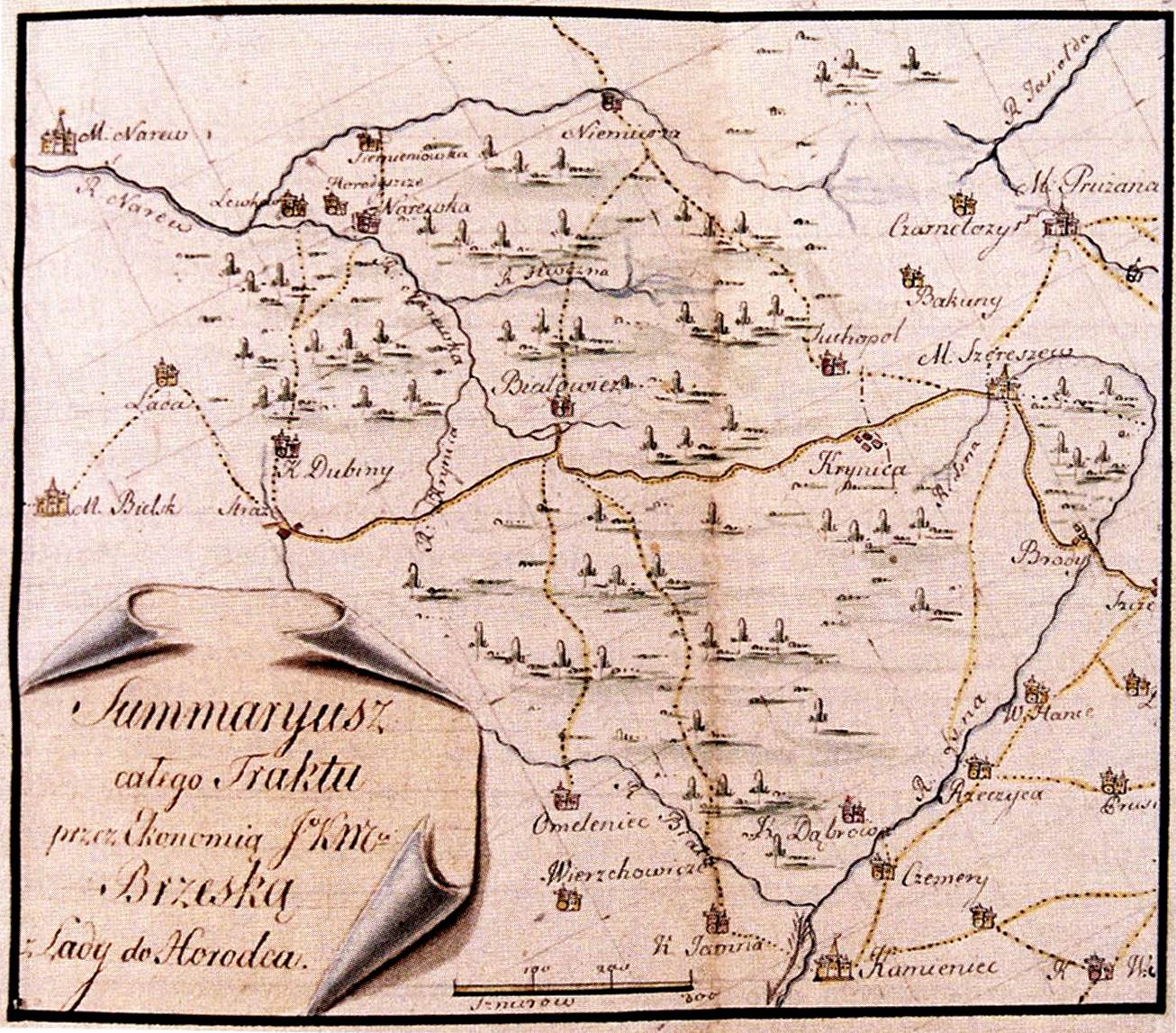
This article contains information about the village of Niemkowicze, Pruzana district, now Belarus. Since one of my branches “Kaluta” comes from there, I collect any information about this village and also publish what I have at the moment. This article will be supplemented over time. I will be glad to receive any new information or clarification of historical inaccuracies on my side.
The appearance of the village Nemkovichi is probably connected with the settlement of the land. As we can see from the name, with great probability the settlement was founded by representatives of the Nemkovichi family, but there are other assumptions, which I will note in this article.
In a legal (administrative) case involving Prince Franciszek Sapieha, who was a privy counselor and prosecutor, concerning Princess Stefan Radziwill and her claims against the owners (possessors) of the land of Sielce:
In the 16th-17th centuries Lichacze, Postolowo, Mokre, Kuszli and all neighboring villages adjacent to Niemkowicze are mentioned, but Niemkowicze is never mentioned there. However, the very fact that these lands were included in the Sielec land serves as a primary source.
Also in the document “Acts of the Brest City Court, 157b-171b” there are mentions of settlements near Niemkowicze, but no mentions of the village itself. These are:
Postolowo
1580, April 24. Wlikowski l. Wictorina Stepanowicza Bornowska that he transferred his rights to the manor of Ostromeczy and in Postolowo, which were given to him in “prezysk” to the “zemyats” Kosciuszko and his matron Marina Boguszewa Kozlowa, to Jerzy Zigimontowicz, sub-starosta of Kobryn, for the same sum as this manor was awarded to him by the zem. berest. court. This sheet contains two “registers” of grounds and subjects of them. Ostromeczy, – one in Polish and the other in Russian. Pages 667-560.
Postolovo
1580, August 6. Sale of l. Mihna Boguszewicz Wozlotowicz to Jerzy Zigimontowicz for the estates in Ostromeczy and in Postolowo, with access to the Kobrynsky forest and the river Muchowiec.
Zamoshe
1631 May 1. Statement by Pawel Dymski-Szmogorowski about the disappearance of various gold and silver items from his possession during his stay at the court of Alexandra Janowa Wisznewska in Nowoszucy, Pinsk district, where they arrived for the wedding of Alexander Wisznewski from their estate of Zamoszje. In the theft of these things he suspects his driver Jan Piotrowicz. In Polish, pp. 2249-50.
“Inventory of the Kobryn Starostvo” for 1597 contains information about Wojtaszta Jakowicki, in which the villages near Niemkowicze are mentioned: Poroslany, Zadeny, Lezajka. Niemkowicze is not mentioned in any written form.
In the “Revision of the Kobryn Starostvo, carried out by order of Her Majesty's Queen” of 1618, the villages near Niemkowicze are mentioned: Poroslany, Jakowicze, Zadeny, Lezajka. Niemkowicze is not mentioned in any written form.
In the “Income Tax Register” of 1667 and the register of 1690 the village of Niemkowicze is not mentioned. But nearby villages are mentioned: Krasne, Postolowo, Zamoszje, Mokre, Lezajka, Poroslany, Jakowicze, Zadeny. It is also important to note that there is a mention of a settlement named Nieńkowicze (Niemkowicze). As one possibility, we can assume that the name was later transformed into Niemkowicze or it was a typo in the text.
From the Uniate MK of the village Mokre (near Niemkowicze), stored in RGIA (St. Petersburg) for 1776-1801, there are records about the inhabitants of the village Niemkowicze.
From the “Hearth Tax Register” of 1775, Niemkowicze and Kuszle together had 15 households and were listed under Pan Sawicki as part of the Czarne Lozy estate.

The village on Schubert's map of 1820-1840:
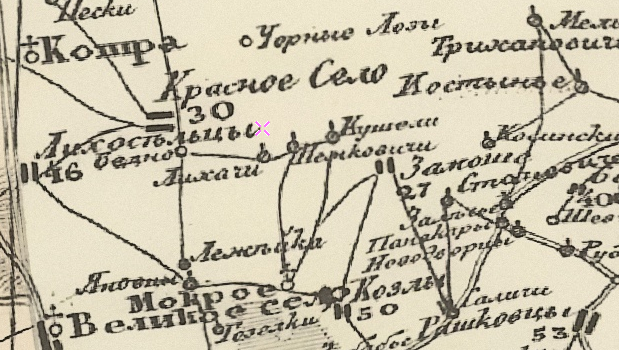
Probably the next owners were representatives of the Lachowski family, coat of arms “Belina”, more specifically Jozef Lachowski. At that time Niemkowicze was part of the Lachowski estate – Mokre. In a case from 1836, there is discussion about the sale of the Niemkowicze estate with 12 decimals of land together with rural buildings to the Pacewicz family – Jan and Katerina.
In the 19th century several families were listed as owners of the Niemkowicze estate: Okinczyce and Galloff on one side, and Pacewicz and Giedrojcу on the other.
There is a mention of the Nemkovichs in the file "Grodno provincial board of the Ministry of Internal Affairs", Grodno.
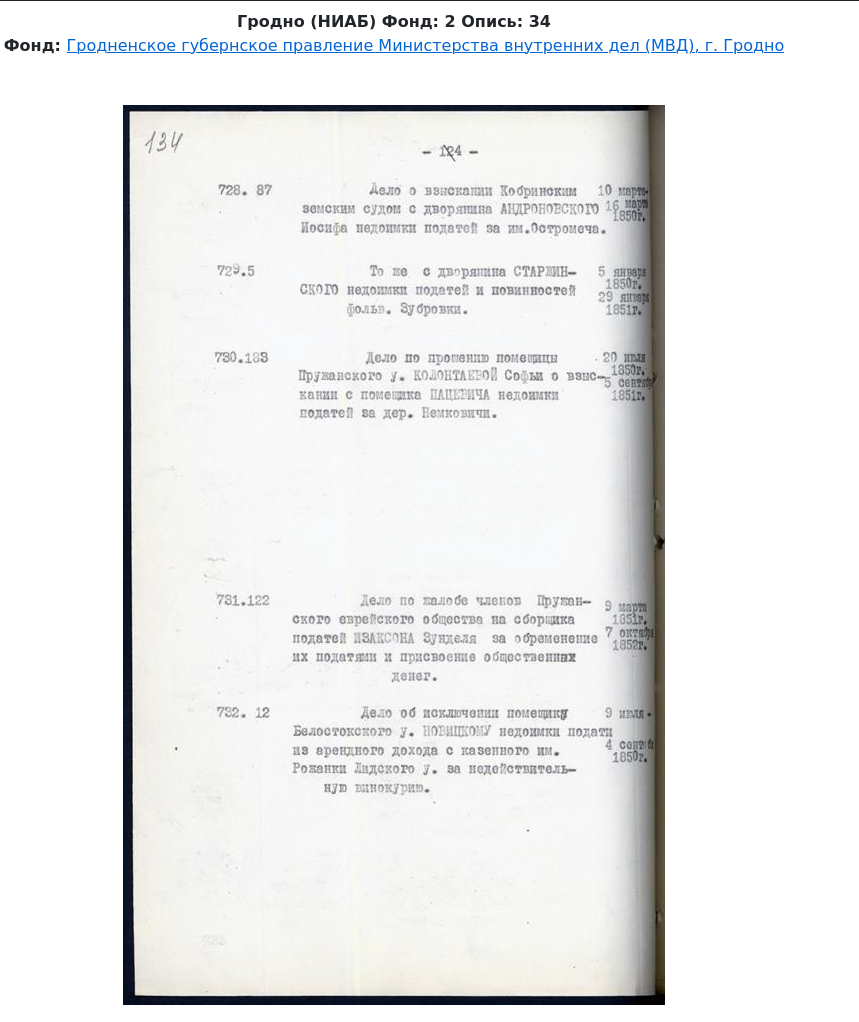
In the 1860s the land holdings of the families were small. The Pacewicze and Giedrojcу families owned a total of 31 dessiatinas of land.
After the uprising of 1863-1864, from February 21 to May 1874, part of the land holdings of the Niemkowicze estate belonging to Piotr Pacewicz and Giedroyc disappeared. They were bought out by temporarily obliged villagers. The estate existed until 1915, most likely not surviving World War I or the Polish-Bolshevik war.
Another part of Niemkowicze, known since the first half of the 19th century, belonged to the Galloff family. According to data from 1845-1847, the estate was owned by Alexander Galloff and Theodor Galloff.
In the 1860s Paulina Galloff [1814-1888], wife of Józef Okinczyc [1804-1878], was listed as the owner of the estate; she owned 64 dessiatinas of land.
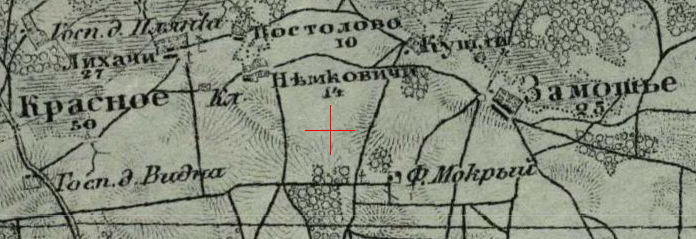
During the uprising of 1863-1864, their son Aleksander Okinczyc (a doctor of the uprising and memoirist) lived in the estate. After the uprising, from February 21, 1866 to January 16, 1873, part of the land of the Niemkowicze estate belonging to Okinczyc P.O. and Galloff F.O. was bought by temporarily burdened peasants. Niemkowicze on the map of 1865-1887:
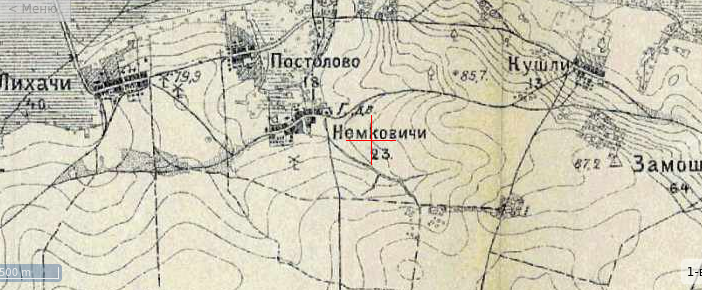
Niemkowicze on the one-verst map of 1866:
In 1870 it was part of Pruzana uyezd, Wielokosielsk parish.
In 1890 the estate had 65 dessiatinas of land.
According to the enumeration of 1897, Niemkowicze was located in Kotra parish, Pruzana district, Grodno province. There were 16 households and 98 inhabitants. There was a bread store.
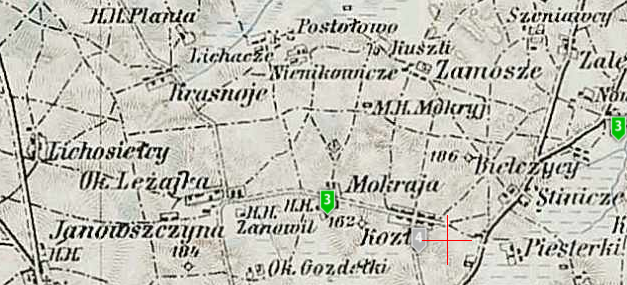
Niemkowicze on the Austro-Hungarian map:
The village is mentioned in the “Geographical dictionary of the Kingdom of Poland and other Slavic countries” of 1902.

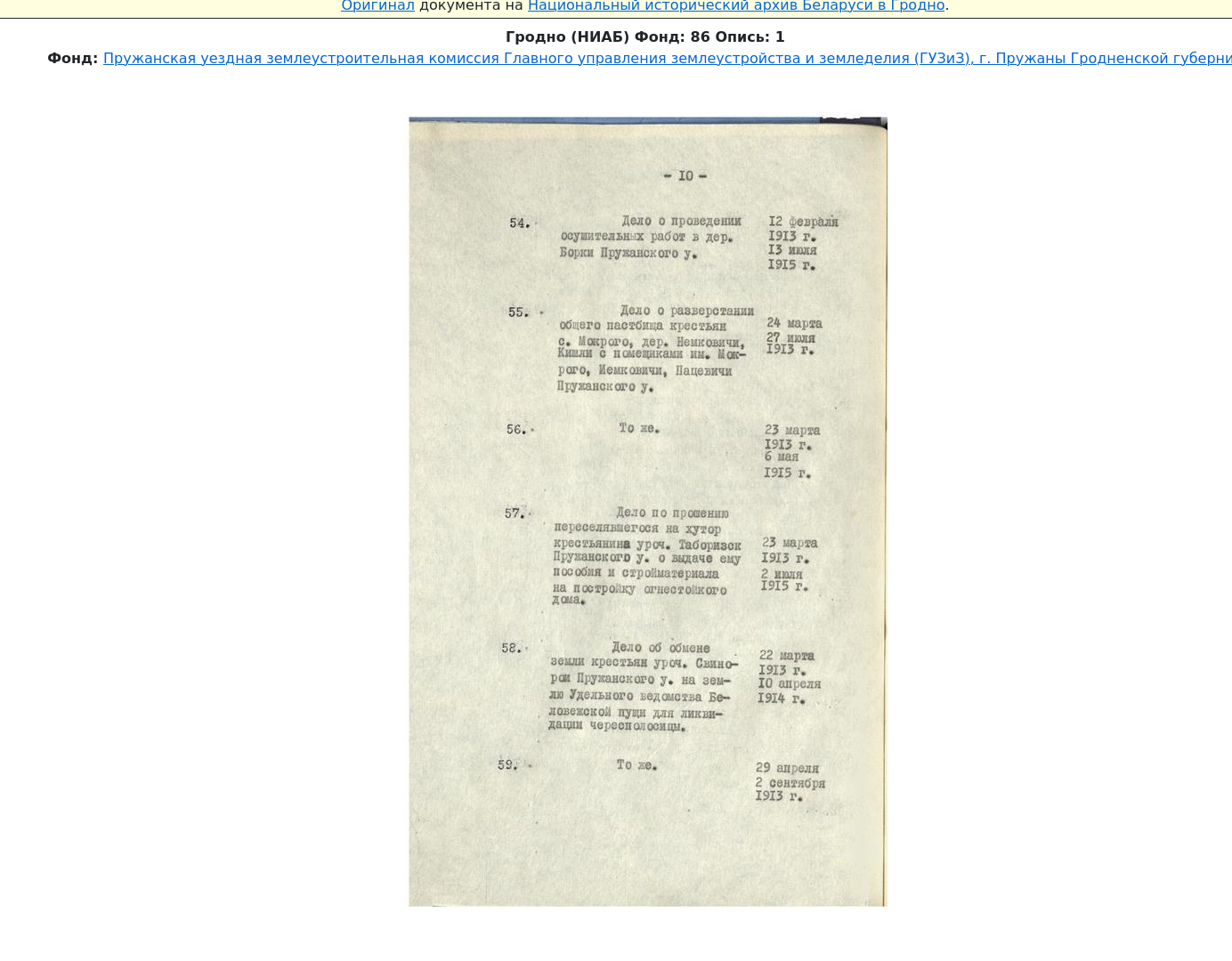
In 1909 it was part of Pruzany uyezd, Kotra volost. There is a mention of Niemkowicze in the file “Pruzany uyezd commission of the Main Department of Land Management and Land Survey, Pruzany”, the case was conducted from March 23 to July 27, 1913.
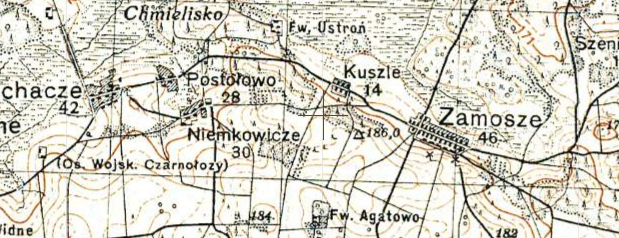
From 1921 as part of Poland. Niemkowicze on the WIG map:
Since 1924 in Pruzana district, Kotra rural municipality. Since 1933 in Pruzana district, Rudniki rural commune. From the accounts of locals, before World War II virtually the entire village was of the Protestant Pentecostal persuasion. According to the stories, Protestantism entered the village from a local man who had returned from working in the United States. Also, people who had previously practiced Catholicism or Orthodoxy, in their majority, attended Protestant meetings. They often gathered in the homes of local people for worship.
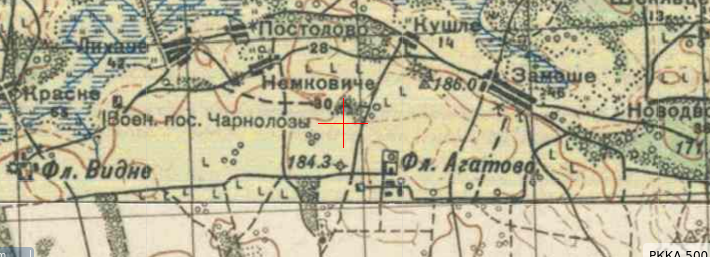
From 1939 it was part of the BSSR. Since 15 January 1940 in Pruzana district, Brest region. There were 31 yards and 135 inhabitants. During the Great Patriotic War, in June 1942, the Nazis burned the village and killed 25 inhabitants. The village on the Red Army map:
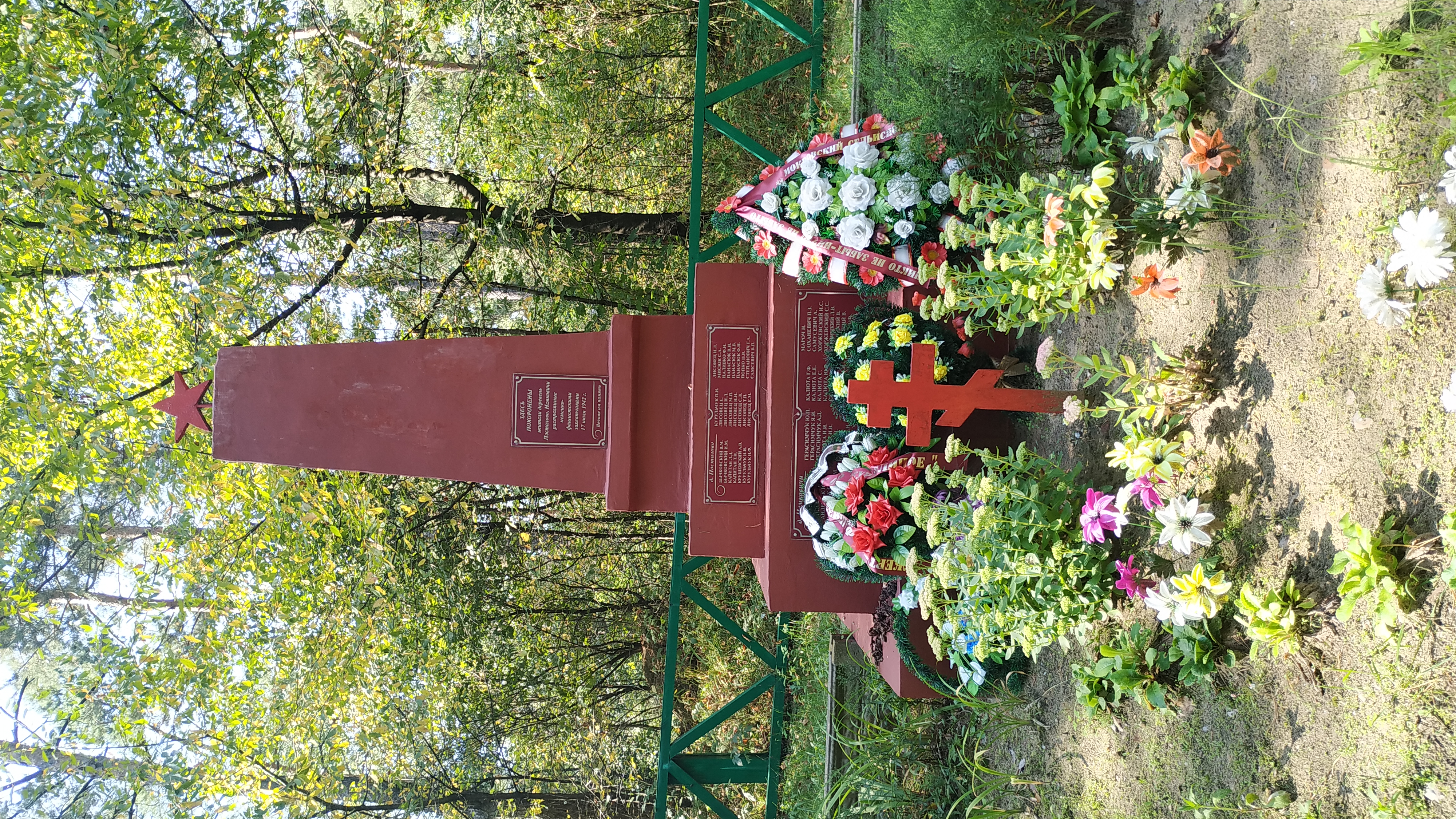
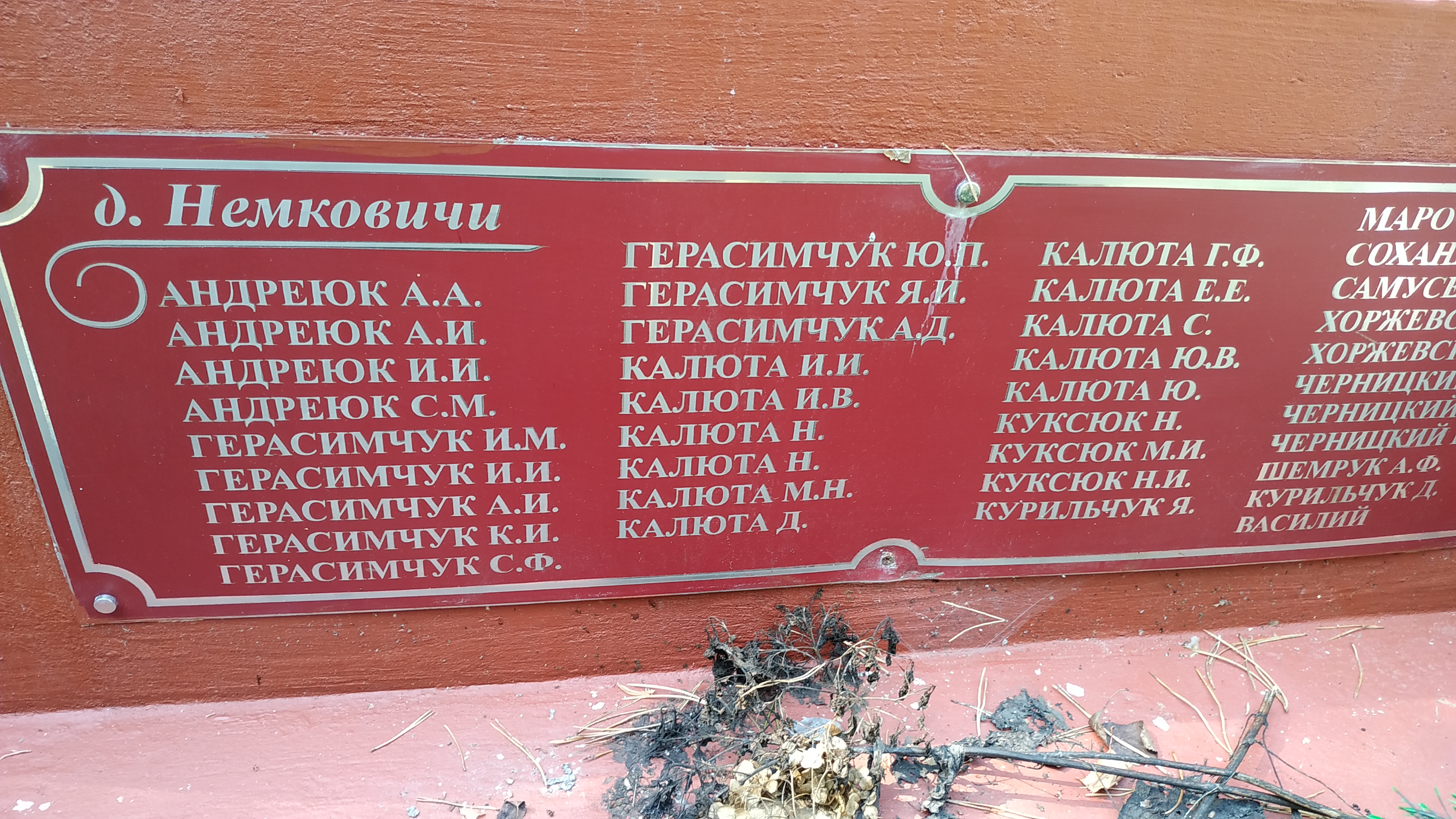
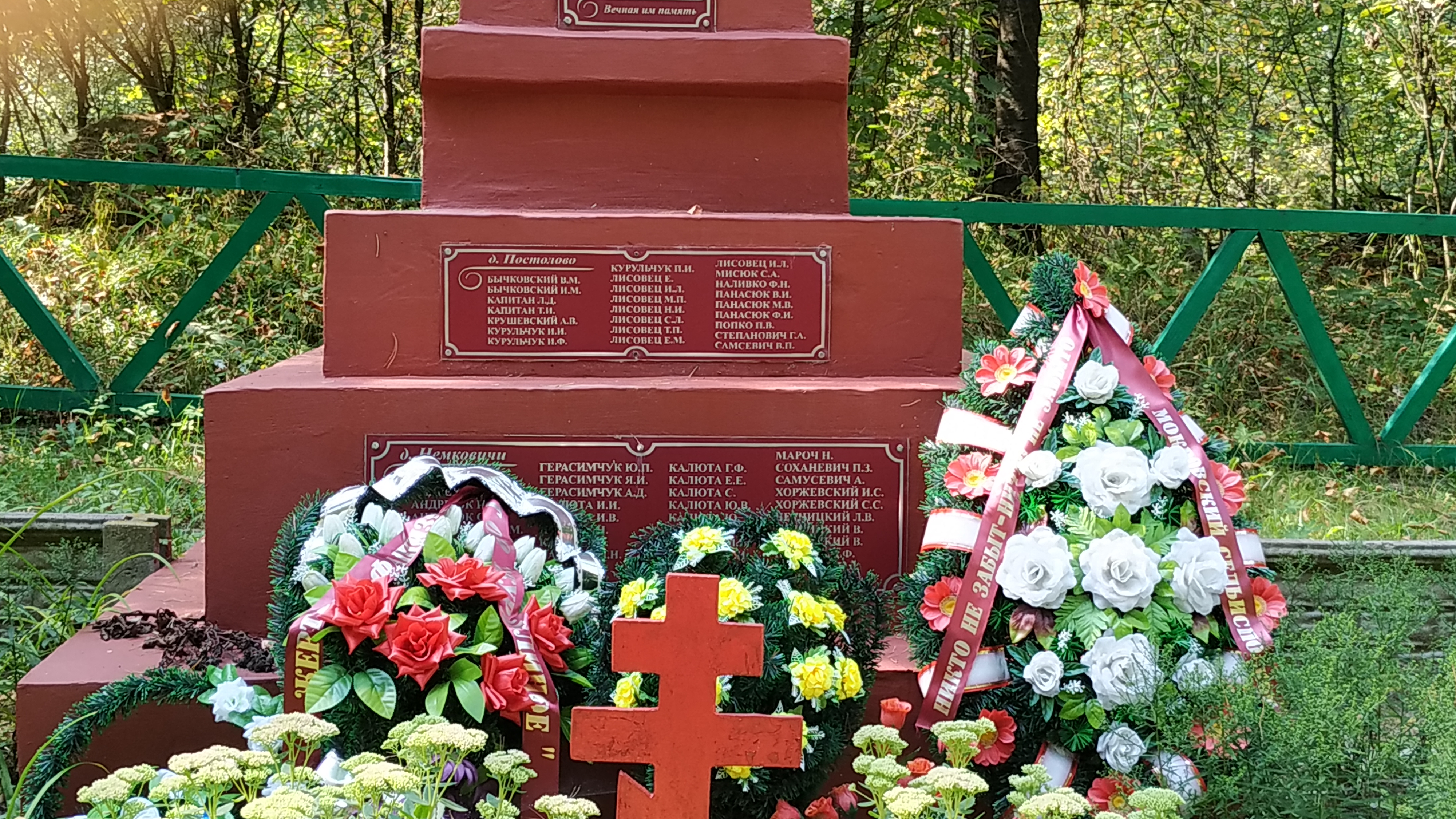
After the war the village was rebuilt. At the front, 2 inhabitants of the village died. In 1970 there were 55 inhabitants; in 2003 there were 6 yards and 9 inhabitants. As of 2025, no one lives in the village. It is in Pruzana district, Mokre village council. Near the village in the woods there is a grave of victims of fascism – 58 peaceful inhabitants of the villages Nemkovichi and Postalowo, who were killed by the Nazis in July 1942. On the grave there is an obelisk.