Written sources mention it in 1776 and 1778 as part of the Drohiczyn County. The village and estate of Rowiny. In 1778, the village had 24 households and 161 inhabitants, and there was a tavern.
From 1795, it was part of the Russian Empire, in the Kobryn district, Slonim, from 1797 in the Lithuanian province, and from 1801 in the Grodno province.
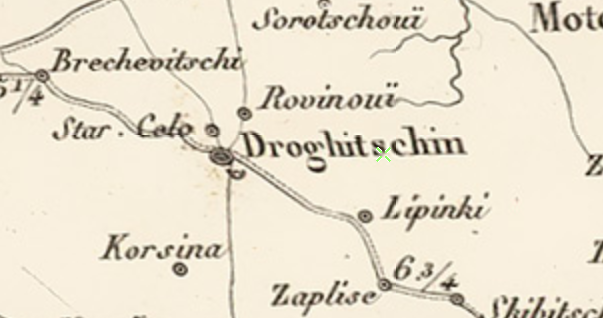
The village on Napoleon's map of 1812:
Settlements on Schubert's map from 1826-1840:
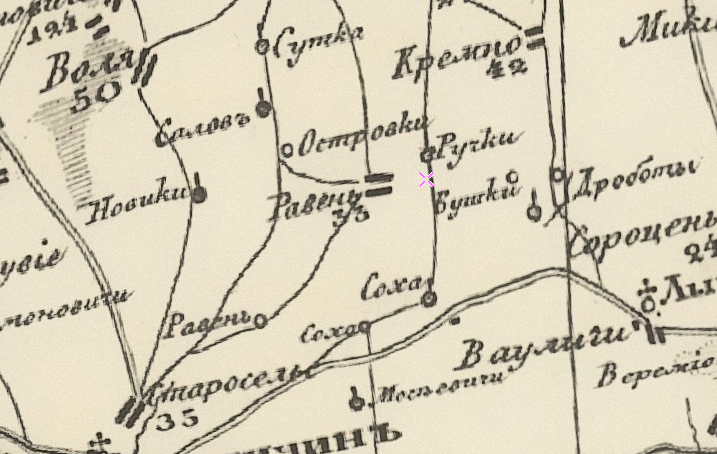
Also on the military-topographic map of the Russian Empire for 1846-1863:
In 1858, the estate of Osip Bugski in Rowiny is mentioned, which had 207 revisor souls (state peasants). The estate of Iosif Kurzaniecki in Rowiny, which owned 460 revisor souls (state peasants) in the Drohiczyn district. The estate of Pawel Jurewicz in Rowiny, which owned 35 revisors' souls in the village of Rowiny.
In 1890, it was the center of the Rowiny rural community, which owned 478 dessiatines of land, 293 of which were suitable for cultivation. The village of Rowiny had 66 dessiatines of land. In 1905, the village of Rowiny had 455 inhabitants, with additional estates and settlements recorded in the area. There was an elementary school.
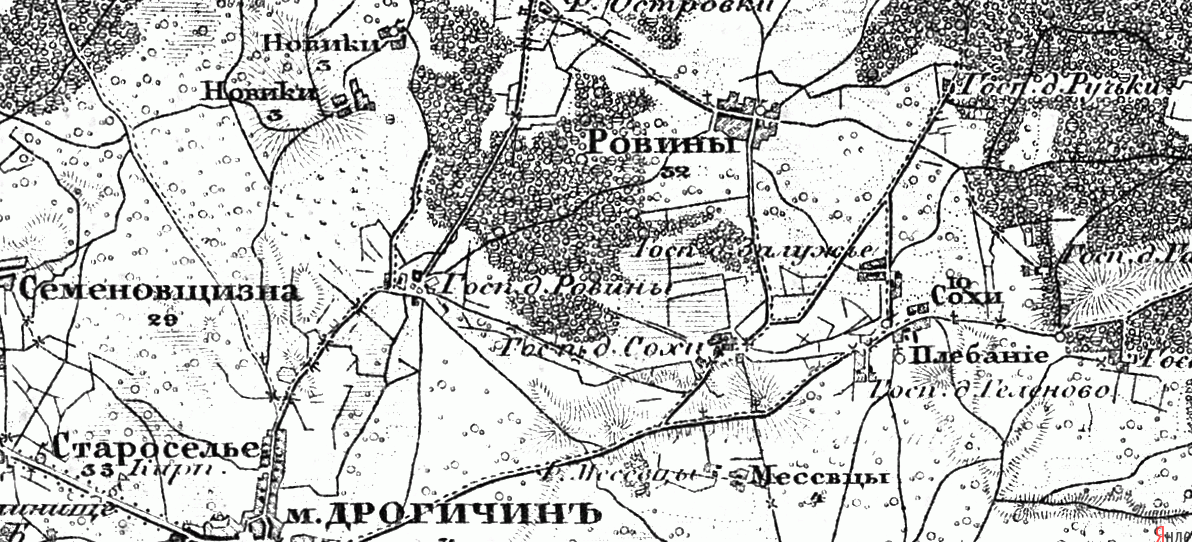
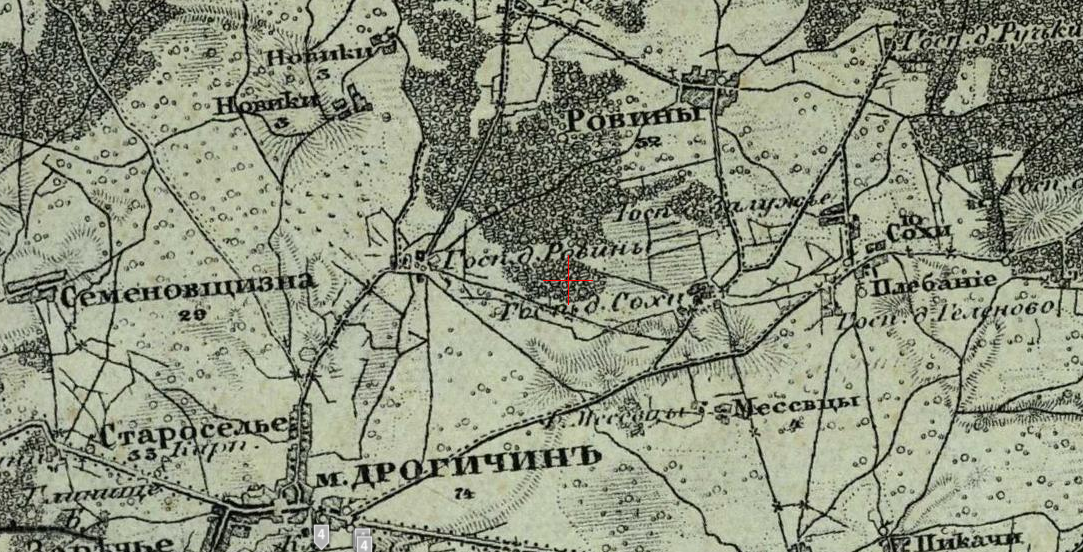
The village on the map:
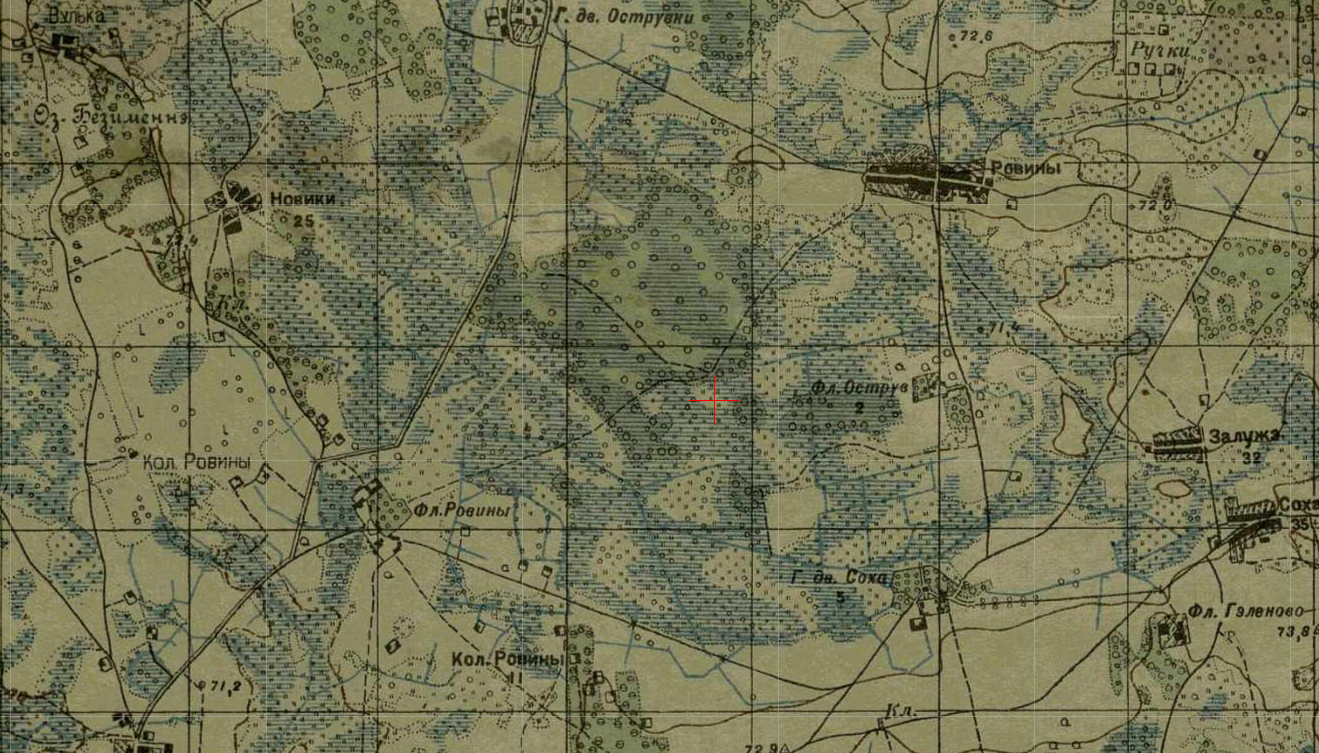
Also, the village on the three-verst map:
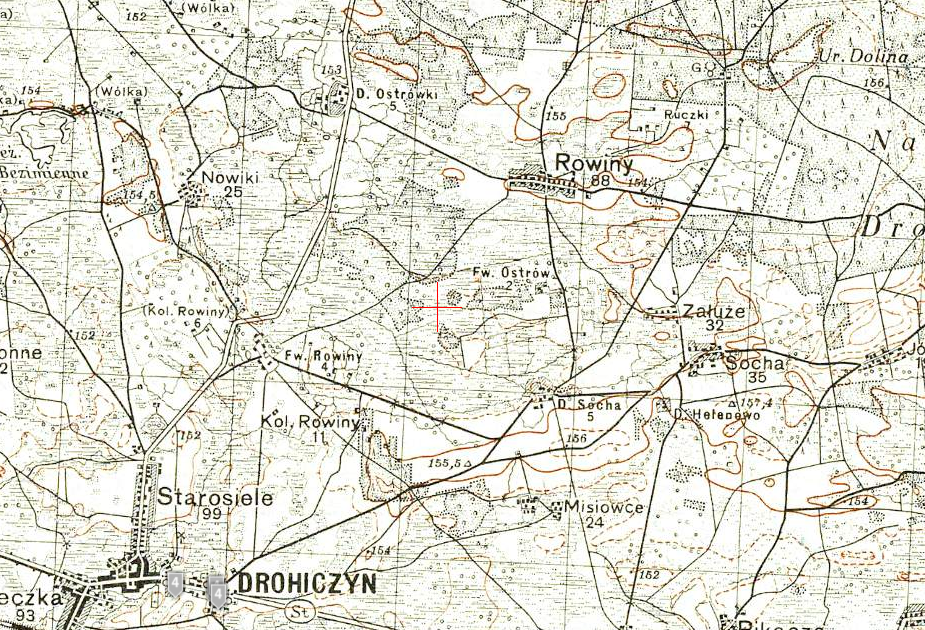
From 1921 to 1939, it was part of Poland, in the Drohiczyn volost, Drohiczyn district, Polesie province. An underground cell of the Communist Party of Belarus operated in the village.
The village on the Polish WIG map:
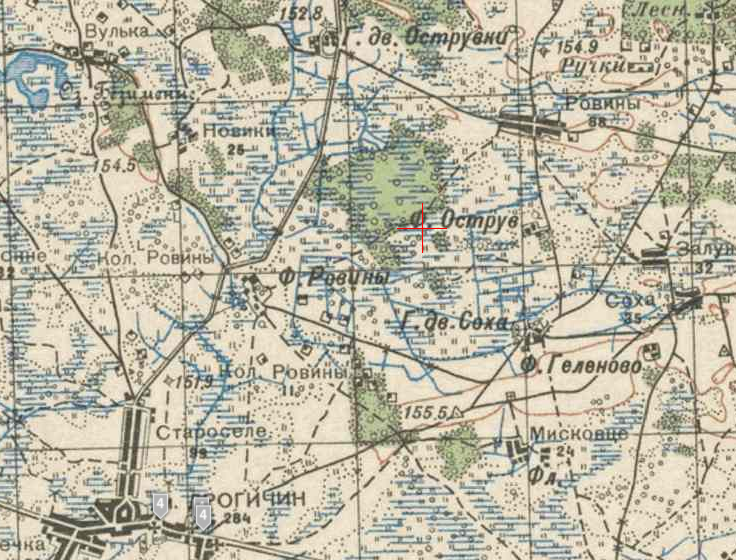
From December 4, 1939, it was part of the BSSR, in the Drohiczyn County, Pinsk Region. From January 15, 1940, it was part of the Drohiczyn District, and from October 12, 1940, it was part of the Lipniki Village Council.
Settlement on the Red Army map:
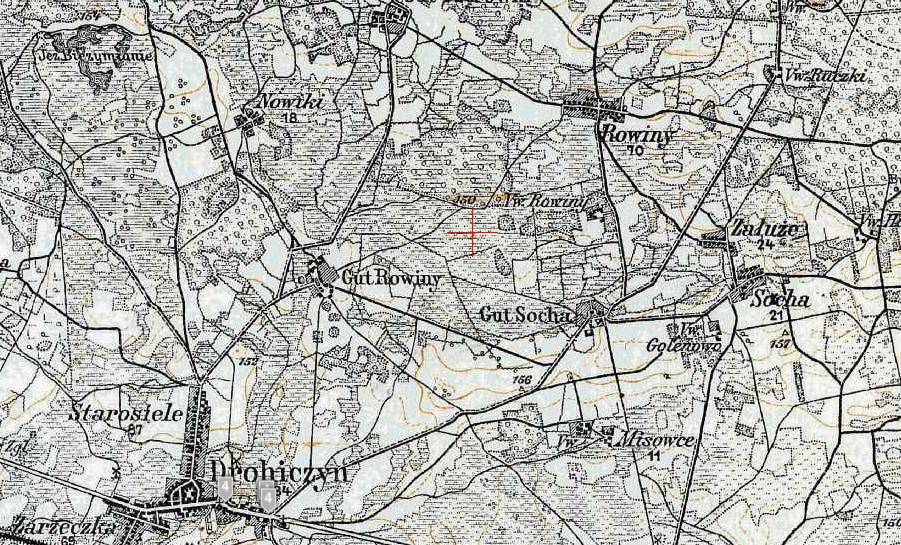
Also on the military map kdwr:
During the Great Patriotic War, 27 residents of the village were killed, 15 of them at the front. Since 1954, it has been part of the Brest Region. Since 1960, it has been part of the Starosielki village council, and since 1965, part of the Drohiczyn village council. In the 1960s, there were 663 residents; in 1970, it was the center of the "Pravda" collective farm with 660 residents; in 1995, there were 199 households and 590 residents.