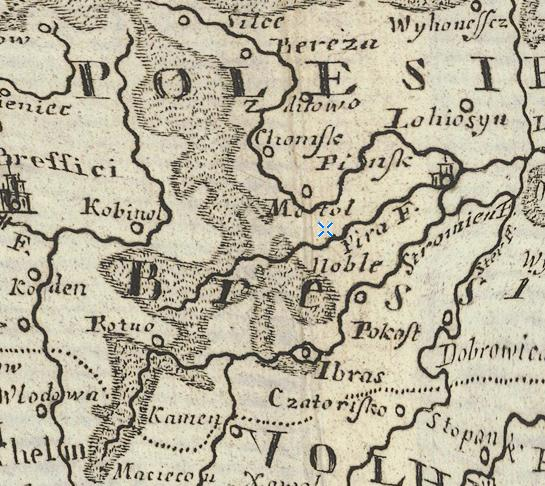
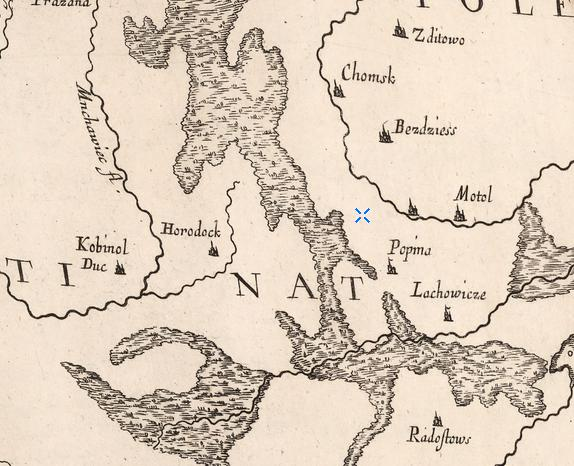
Wielki Las (Great Forest) is mentioned in 1546, in the description of the southern borders of the Grand Duchy of Lithuania with the Crown of Poland, the tract of the Great Forest on the farmland of Belin village, Pinsk district, Brest voivodeship. The Great Forest is shown on the map of 1665, where we can see that it extends to the borders of today's Grodno region, Belarus.
On the map of 1740, the tract is also present, but a little smaller.
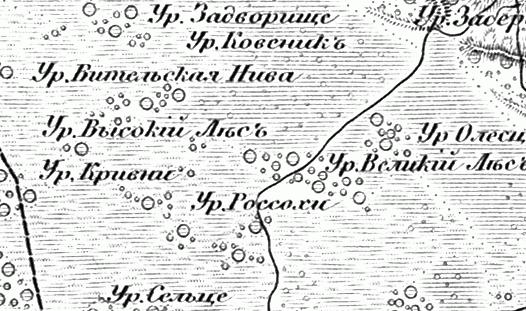
On the military topographic map of 1846-1863, the tract is also marked on the map:
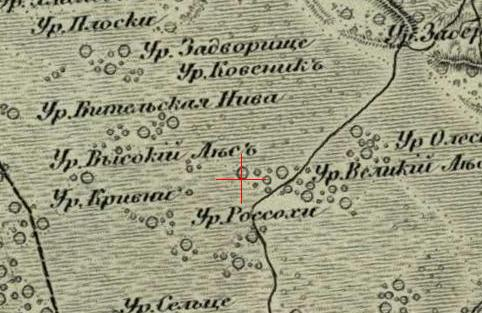
The tract was also marked on the three-verst map, but in a slightly smaller size:
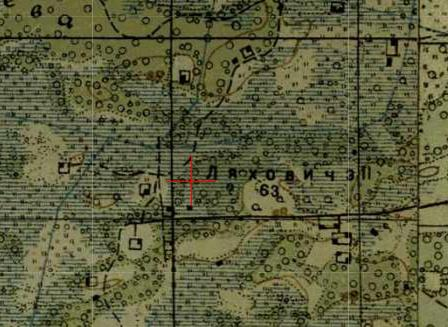
But on the one-verst map the settlement Liachowicze-2 was already marked:
In 1905 there was already a folwark and a tract, with 12 inhabitants.
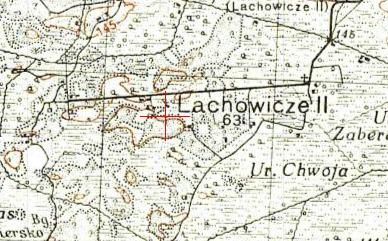
From 1921 to 1939 it was part of Poland. In 1930 the settlement was called Liachowicze-2. In the ethnic composition of the population of that period, Belarusians made up 85.6%, Poles – 14.4%. The confessional composition of the population was dominated by Orthodox Christians (87.2%) and Catholics (12.8%). The village was marked on the WIG map:
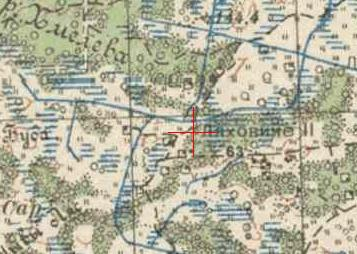
From 1939 in the BSSR, a colony in Osowiec volost, Drochiczyn district, Pinsk region. There were 93 households, 495 inhabitants. Since 12 October 1940 in Popina village council, Drohiczyn district. In 1940 the village had 58 households, 291 inhabitants; there was a working elementary school. During the Great Patriotic War, in May 1944, the village was burned by Nazi invaders, and 30 inhabitants were killed. In fights with the enemy, 16 inhabitants of the village and Soviet partisans were killed. The village on the Red Army map:
Since 1954, as part of Brest region. In 1959 the village had 223 inhabitants, in 1970 – 249 inhabitants, in 1995 – 73 households, 189 inhabitants, elementary school.