In written sources it was mentioned in 1793 as a part of Chomsk county, Kobryn district, Brest voivodeship. There were 22 households and 137 inhabitants.
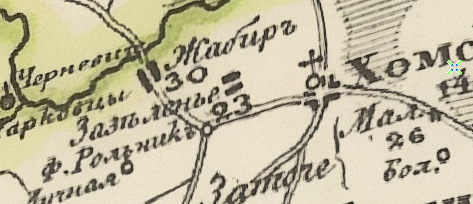
From 1795 in the Russian Empire, in Kobryn district, Slonim district, from 1797 in Lithuanian, from 1801 in Grodno province. The village is marked on Schubert's map of 1826-1840:
It is also marked on the military topographic map of the Russian Empire for 1846-1863:
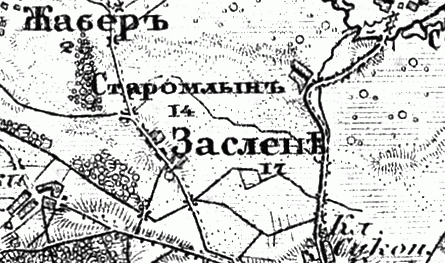
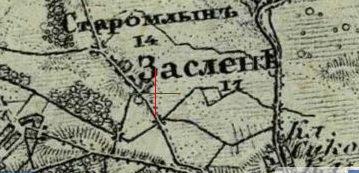
In 1858 the village was the center of the rural community in Chomsk parish, Kobrin district, Grodno province, part of the Chomsk estate of the Puslowski. There were 151 revision souls (state villagers) in the village. In 1890 the inhabitants of the village community owned 194 tithes of usable land. The village is on the one-verst map:
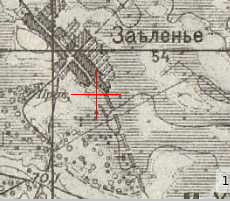
The village on the three-verst map:
In 1905 there were 346 inhabitants in the village.
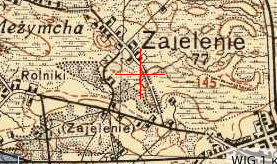
From 1921 to 1939 it was a part of Poland, in Chomsk Commune, Drohiczyn District, Polesie Voivodeship. In 1921 there were 27 courtyards and 123 inhabitants (all were Poleshuks and Orthodox). The village is on the Polish WIG map:
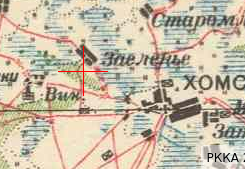
Since 1939 in the BSSR. From 12 October 1940 the village was in Zabierz village council, Drohiczyn district, Pinsk region. There were 61 yards and 320 inhabitants; there was an elementary school. During the Great Patriotic War 7 inhabitants of the village perished. The village on the Red Army map:
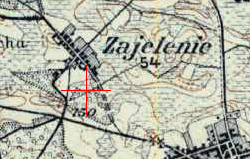
Also the village on the German map kdwr:
Since 1954 in Chomsk village council, Drohiczyn district, Brest region. In 1959 there were 67 inhabitants, in 1970 – 210 inhabitants, in 1995 – 54 yards and 136 inhabitants. Until 2004 the village was part of the Kirov collective farm.